



Almost every homeowner faces this question eventually, usually after a leak or a storm. A repair costs a fraction of a replacement, so the instinct is to repair. Sometimes that's right. Sometimes it's throwing money at a roof that's going to need replacing in two years anyway, and the repair money is simply gone. The decision isn't really about the leak in front of you. It's about the condition of everything around it: how old the roof is, what the deck underneath looks like, how many layers of material are up there, and whether the failure is isolated or the first of many. A good contractor should walk you through those four things and give you a straight answer, including when the answer is that a repair will do fine. Here's what actually goes into that call, so you can evaluate the recommendation you get rather than just accepting a number.
The decision isn't really about the leak in front of you. It's about the age, the deck, the layers, and whether the failure is isolated or the first of many.
Start With How Old the Roof Is
Age sets the frame for everything else. A roof in the first half of its expected life with one damaged section is a repair, almost always. A roof near the end of its life with the same damage is usually a replacement, because the next failure is already coming and the one after that. If you don't know the age, there are clues. Granules collecting in the gutters, shingles that curl at the edges, bald patches where the surface has worn through, and brittleness that makes shingles crack when lifted all point to a roof that's done. If several of those show up together, spending on a repair buys very little time.
What the Deck Is Telling You
The deck is the part nobody sees, and it decides more than the shingles do. If water has been getting in for a while, the sheathing underneath may be soft, delaminated, or rotted, and no repair on the surface fixes that. Signs from inside include a sagging line along the roof plane, stains on the underside of the decking, or a spongy feel when someone walks the roof. When decking has to be replaced, the shingles above it come off anyway, and at that point a full replacement often costs little more than a large repair. That's why any honest assessment includes looking at the attic side and not just the surface.
- Granules collecting in the gutters
- Shingles that curl at the edges
- Bald patches where the surface has worn through
- Brittleness that makes shingles crack when lifted
- A sagging or wavy roof plane seen from outside
How Many Layers Are Up There
Older houses in New York often carry two or even three layers of roofing, because previous owners went over the top instead of tearing off. Layers hide everything. You can't inspect a deck through them, and each one adds weight the framing was never designed to carry. If a second or third layer exists, a repair is patching a problem you can't see the bottom of. It also limits what a new roof can do, since most manufacturers and most codes have opinions about layering. Finding out is easy: a small lift at an edge shows how many courses are stacked, and it changes the recommendation immediately.

When a Repair Is the Right Call
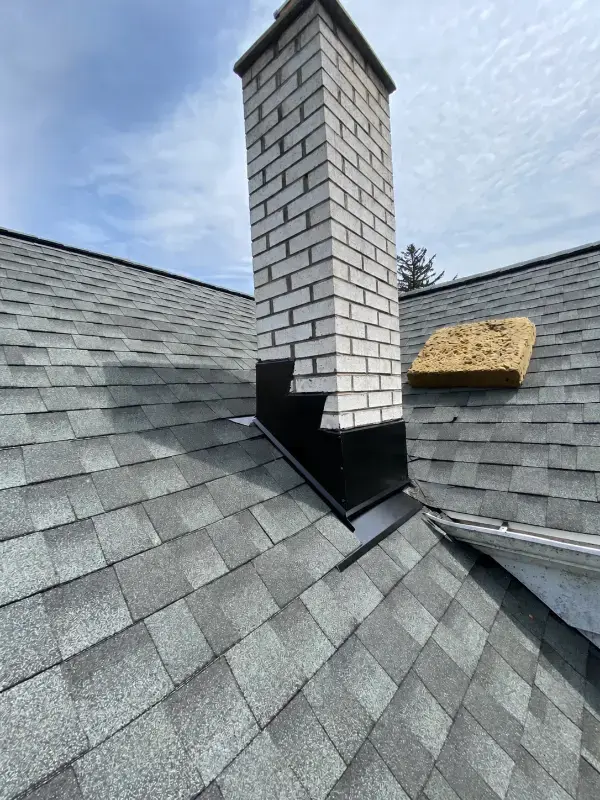
Plenty of situations call for a repair and nothing more. A roof with real life left, sound decking, a single layer, and one identifiable failure point should be repaired. Storm damage to a limited area is a repair. A worn pipe boot, a section of failed flashing, lifted ridge caps, or a valley that needs reflashing are all repairs on an otherwise healthy roof. The test is whether the rest of the system is sound. If it is, a repair is the right use of your money, and a contractor who quotes a full replacement anyway is worth a second opinion. Ask which of the four factors above drove the recommendation.
A contractor who quotes a full replacement on an otherwise healthy roof is worth a second opinion. Ask which of the four factors drove the recommendation.
Frequently Asked Questions
It's possible in some cases, but it hides the deck and adds weight. We recommend a full tear off so the sheathing can be inspected and any rot corrected before new material goes down.
It depends on material, ventilation, and installation quality. Snow load, ice dams, and freeze cycles here are harder on a roof than a milder climate, so ventilation matters more than most people expect.
Ask before work starts. Warranty terms vary by manufacturer and by whether the original installation was registered, so it's worth confirming rather than assuming either way.
From the attic side, look for stains, sagging, or soft spots on the underside of the sheathing. From outside, a wavy roof plane usually means the deck has gone.
On a full replacement quote, yes. Ask each contractor which specific conditions drove the recommendation. If they can't point to the deck, the age, or the layers, keep looking.