




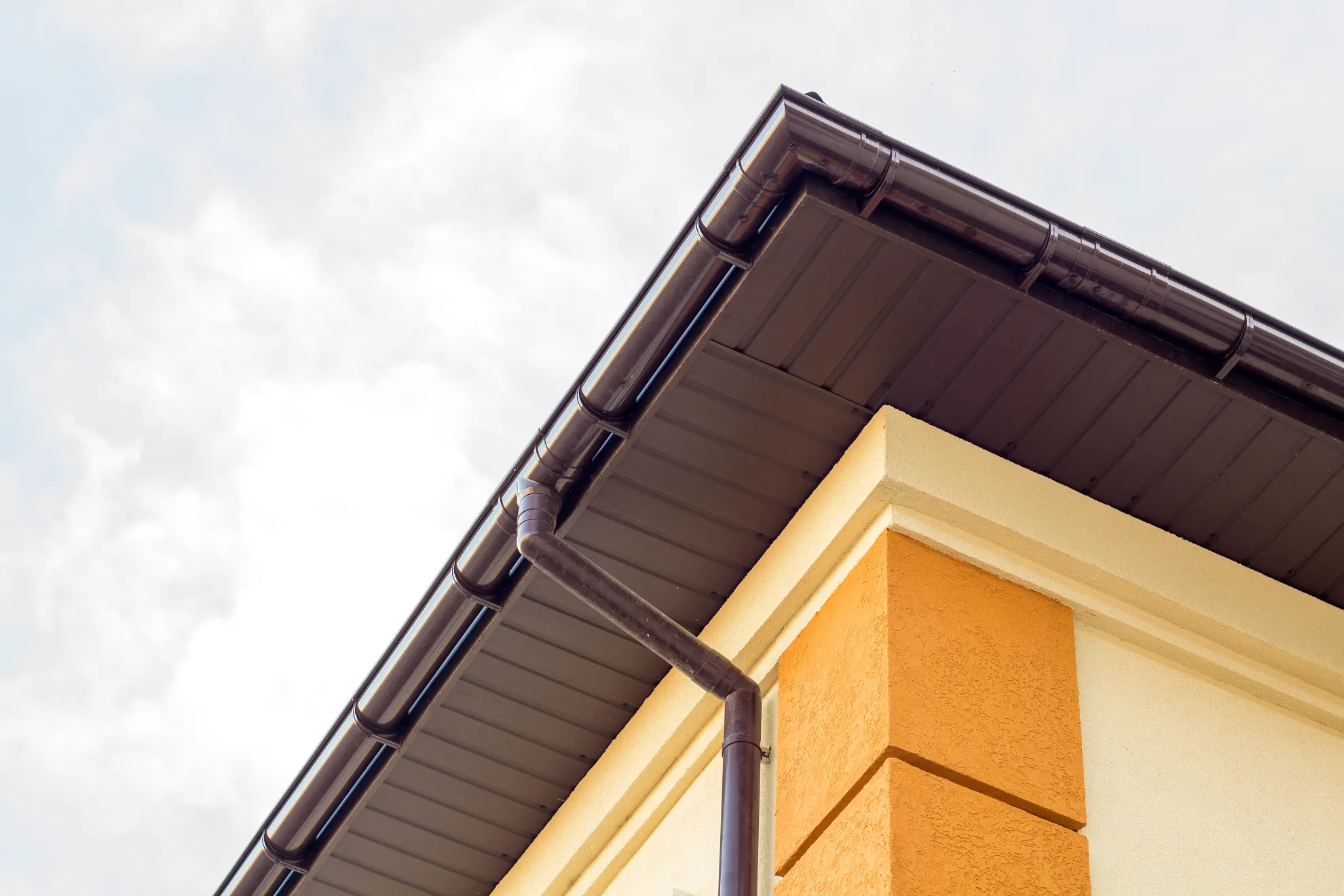
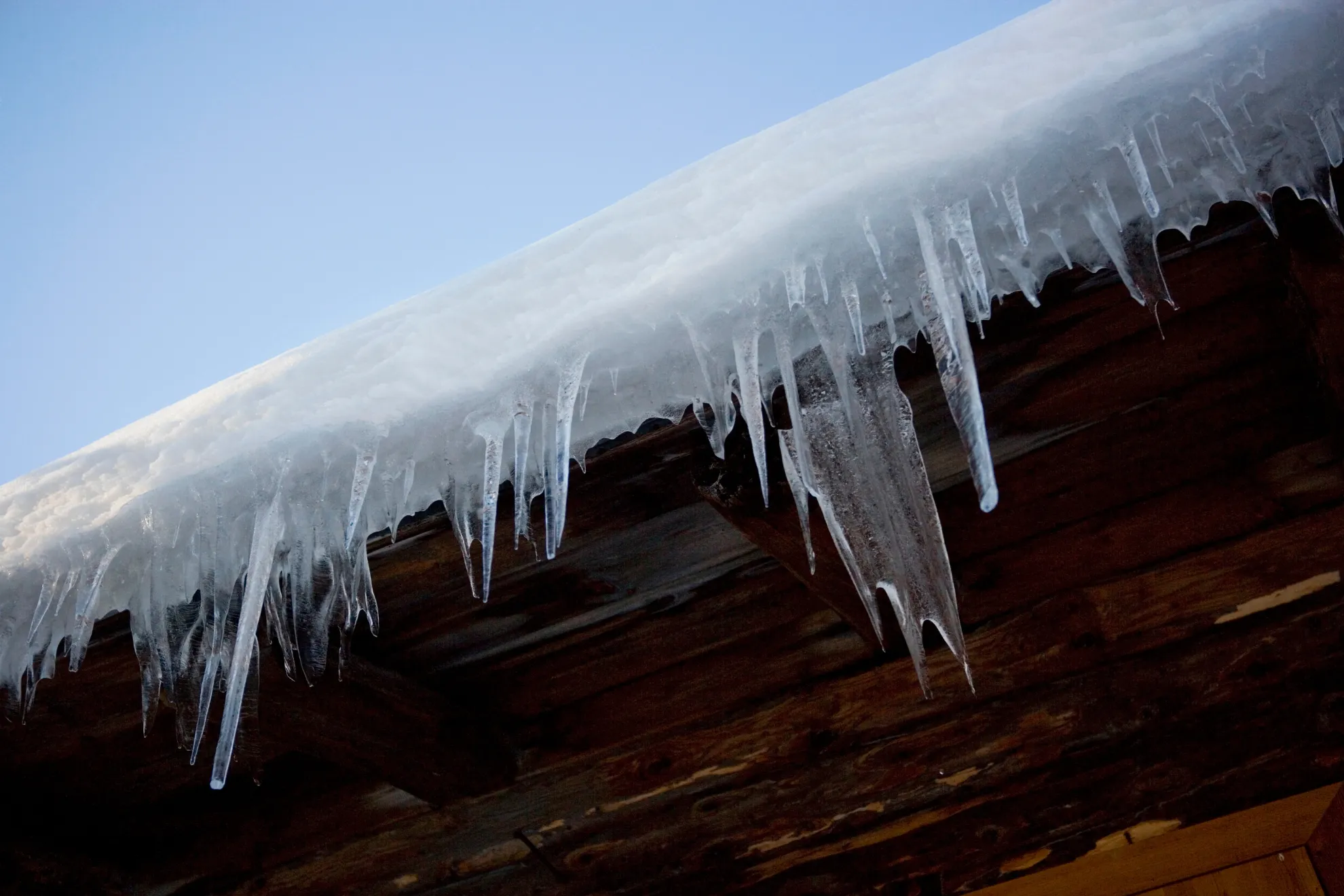
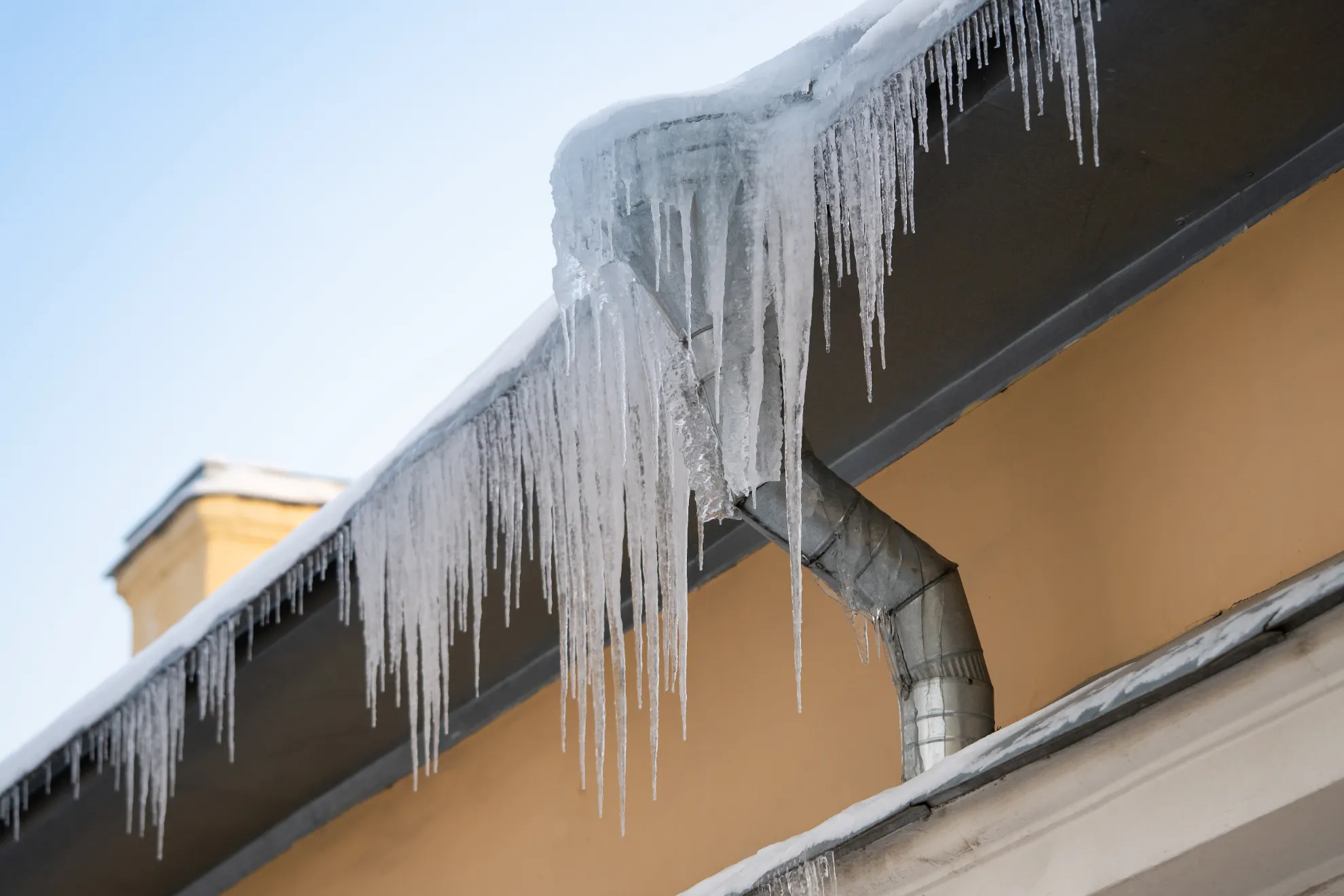
Every winter the same thing happens across New York. Snow sits on a roof for a week, a ridge of ice builds along the edge, icicles hang off the gutter, and water starts showing up on an interior ceiling. Most people blame the gutters. The gutters are where you see the problem, but they're almost never the cause of it. An ice dam forms because part of your roof is warm and part of it is cold. Heat escaping from the living space warms the underside of the roof deck. Snow on that warm section melts, even when the air outside is well below freezing. The meltwater runs down toward the eave, which hangs past the heated part of the house and stays cold. There it refreezes. Do that for a few days and you get a wall of ice at the edge. Water backs up behind it, sits on the shingles, and works its way underneath. Shingles shed water running downhill. They were never designed to hold standing water, which is exactly what an ice dam creates.
The gutters are where you see the ice dam, but they're almost never the cause of it. The real problem starts in the attic.
Why Attic Heat Is the Real Culprit
Every ice dam starts with heat that should have stayed in the house. Recessed lights, an open attic hatch, gaps around plumbing stacks, ductwork in the attic, and thin or compressed insulation all let warm air into the space under the roof. That air warms the deck, and the snow on top of it melts from below. Ventilation matters just as much. A properly vented attic keeps the deck close to outdoor temperature, so snow stays frozen instead of melting and refreezing. In older New York houses the insulation was often added once, decades ago, and the ventilation was never touched. That combination produces ice dams reliably every single winter.
What Ice Dams Actually Damage
The icicles look dramatic, but the real damage happens where nobody sees it. Water backing up under the shingles soaks the deck, then the insulation below it, then eventually the ceiling. Repeated wetting rots sheathing and framing over a few seasons. The weight of the ice itself pulls gutters loose, bends hangers, and tears fascia away from the rafter tails. Water that gets into a wall cavity instead of a ceiling can go unnoticed for years while it works on the framing. And every freeze and thaw cycle in that saturated material opens it up a little further, which is why an ice dam problem gets worse each winter rather than staying the same.
- Soaked roof deck and rotting sheathing
- Wet insulation losing R-value
- Gutters pulled loose and bent hangers
- Fascia torn away from rafter tails
- Water in wall cavities that goes unnoticed for years
What Doesn't Fix Ice Dams
Plenty of common responses treat the symptom. Chipping ice off the edge with a hammer damages shingles and gutters and does nothing about next week's snow. Salt or ice melt products in the trough corrode metal and stain masonry below. Gutter guards affect leaves, not melt, so they change nothing about the cycle. Heat cables can keep a channel open, but they run on electricity all winter and they treat the effect rather than the cause. Even a brand new roof will dam if the attic underneath it is still warm. The shingles are not the problem, which is why replacing them alone rarely ends the pattern.
What Does Help
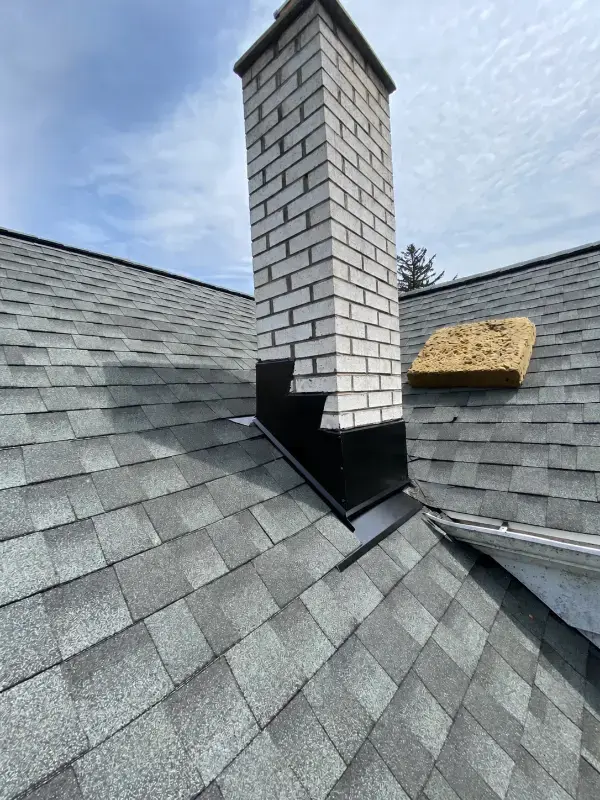
The durable fix works from the inside out. Air sealing comes first: closing the gaps where warm air escapes into the attic around lights, hatches, chimneys, and plumbing penetrations. Insulation goes next, brought to a consistent depth without blocking the airflow at the eaves. Ventilation completes it, with intake at the soffit and exhaust at the ridge so the deck stays cold. On a roof replacement, ice and water shield along the eaves gives a second line of defense if a dam forms anyway. In New York that membrane is worth the cost, because a roof here will see standing ice at the edge sooner or later.
Even a brand new roof will dam if the attic underneath it is still warm. The shingles are not the problem.
Frequently Asked Questions
No. Gutters are where the ice becomes visible, but the dam forms because attic heat melts snow on the roof above. Clean gutters help drainage, but they don't stop the melt and refreeze cycle.
Not by itself. If the attic is still warm, snow will still melt and refreeze at the eave. A replacement is a good moment to add ice and water shield and fix the ventilation.
They can keep a drainage channel open on a problem eave, but they use power all winter and they don't address the cause. Most homeowners are better off spending that money on air sealing.
We'd advise against it. Hammering at ice damages shingles, gutters, and flashing, and the dam rebuilds with the next snowfall anyway.
Usually insulation and ventilation. Two houses on the same street with different attic conditions will behave completely differently under the same snow.


